



Bruce Hammock: 1947-2026
UC Davis Distinguished Professor Hammock, a Legendary Scientist, Mentor and Friend

(Editor's Note: A celebration of life will take place Oct. 10, 2026, in California Hall, UC Davis campus. Among the speakers will be Chancellor Gary May. Pre-registration is underway at https://forms.gle/ST3ghkt15oUwewxD9)
UC Davis Distinguished Professor Bruce Dupree Hammock, an internationally recognized scientist and an acclaimed member of the UC Davis Department of Entomology and Nematology since 1980, died Monday, Jan. 5, in Davis. He was 78.
Dr. Hammock, who held a joint appointment with the UC Davis Comprehensive Cancer Center, was renowned for his chemistry, toxicology, biochemistry, entomology and human health research that led to elected membership in the National Academy of Sciences and the National Academy of Inventors; scores of professional honors and awards; and accolades from administrators, colleagues, researchers, alumni and students.
“Bruce Hammock’s groundbreaking contributions to insect physiology, toxicology, pharmacology, and experimental therapeutics have been recognized internationally, but here at UC Davis we also had the privilege of knowing him firsthand as a dedicated mentor, an outspoken advocate for students and faculty, and a generous and beloved colleague,” said Chancellor Gary May.
“I was especially proud to present Bruce with the first-ever Lifetime Achievement Award in Innovation as part of the Chancellor’s Innovation Awards in 2020, and to later celebrate his recognition as recipient of the 2024 Graduate Studies Distinguished Graduate and Postdoctoral Mentoring Award,” the chancellor continued. “We are all better for having had Bruce as a member of our community for 46 years. I am deeply grateful for his enduring commitment to our campus, which helped shape who we are today and will continue to impact us in the years to come.”
'We Lost a Legend'
Said Joanna Chiu, professor and chair of the Department of Entomology and Nematology: “Today (Jan. 5) we lost a legend. Bruce will not only be remembered as a uniquely brilliant and extraordinary scientist and thinker, but also a kind and generous individual and a fierce supporter of his mentees and colleagues. We will miss him dearly."
“Bruce was the backbone of the department for decades,” said UC Davis Distinguished Professor Emerita Lynn Kimsey, a UC Davis doctoral alumna, former interim department chair, and a 34-year director of the Bohart Museum of Entomology. “His lab, students and staff were internationally recognized, coming up with landmark discoveries, including increasing the efficacy of pesticides and understanding the toxic effects , the biochemistry of inflammation, and novel pain treatments, among other things. Despite multiple honors and recognition, Bruce was a humble man, always willing to help and collaborate.”
Dr. Hammock is renowned for co-discovering soluble epoxide hydrolase (sEH)--an enzyme in the human body that breaks down regulatory fatty acids--and for his 50-year research on sEH inhibitors that led to therapeutic drug discoveries targeting such diseases as pain, eye and kidney disease, traumatic brain injury and stroke, Parkinson’s and Alzheimer's disease. In 2011, he co-founded EicOsis to fulfill a lifelong commitment to finding safer and more effective ways to treat chronic pain.

In his research, Dr. Hammock explored health risks from pesticides, mycotoxins, other bioterror agents, dietary and environmental chemicals, such as microplastics. For 35 years, he directed the UC Davis Superfund Program, a multidisciplinary program funded by the National Institutes of Health’s National Institute of Environmental Health Sciences that crossed multidisciplines, including engineering, soil and water contamination, toxicology and analytical chemistry. Hammock supported scores of pre- and postdoctoral scholars in interdisciplinary research in five different colleges and graduate groups on campus. For 14 years, he directed an NIH Training Grant in Biotechnology at UC Davis for cross training in physical and biological sciences.
The recipient of numerous awards, including the Alexander von Humboldt Foundation Award in Agriculture, the Royal Society of Chemistry's Horizon Team Award, and the Bernard Brodie Award in Drug Metabolism from American Society for Pharmacology and Experimental Therapeutics, Dr. Hammock was a fellow of the California Academy of Sciences, and Entomological Society of America. At UC Davis, he received the Academic Senate's Distinguished Teaching Award, the Faculty Research Lectureship, and the Graduate Studies Distinguished Graduate and Postdoctoral Mentoring Award.
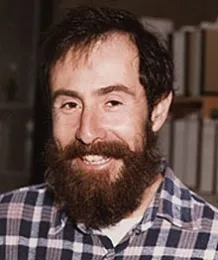
Native of Little Rock, Ark.
Born Aug. 13, 1947 in Little Rock, Ark., (his father was a postal worker and his mother, an encyclopedia sales person), Bruce received his bachelor's degree in entomology (with minors in zoology and chemistry) magna cum laude from Louisiana State University, Baton Rouge, in 1969. He obtained his doctorate in entomology-toxicology from UC Berkeley in 1973 with mentor John Casida.
His career included public health medical officer with the U.S. Army Academy of Health Science, San Antonio, and postdoctoral fellow at the Rockefeller Foundation, Department of Biology, Northwestern University, Evanston, Ill. He joined the UC Riverside faculty in 1975 and five years later, the UC Davis faculty. At UC Davis, he taught biochemistry, endocrinology, toxicology, and pharmaceutical discovery and development.
Over his nearly five decades at UC Davis, he published some 1300 research articles. He also has some 80 patents.
Hammock said his No. 1 criteria for selecting scientists in his lab was that they be "curious." He also believed that science should be "fun." Once every summer for nearly a decade, he sponsored water balloon battles on the Briggs Hall lawn, urging other labs to join his lab. Away from the lab, he loved rock-climbing, hiking and kayaking.
Tributes
Dean Ashley Stokes, College of Agricultural and Environmental Sciences (in a message to the Department of Entomology and Nematology): "I am writing to acknowledge and share in the deep sadness over the passing of cherished colleague, Professor Bruce Hammock. Even though I am still relatively new to the college, I very quickly came to appreciate Bruce’s extraordinary accomplishments and dedication to the pursuit of academic excellence and scientific solutions. He was a towering figure in his field — a distinguished professor and member of the National Academy of Sciences whose exceptional scientific achievements and generous spirit shaped our college, our campus, and the broader scientific community in countless ways, across several decades. Bruce’s career stands as a testament to both intellectual brilliance, deep humanity, and dedication to UC Davis. Beyond his scientific achievements, I understand that Bruce was a devoted mentor and a source of inspiration for all who had the privilege of working with him. His curiosity, warmth, and generosity of spirit helped shape generations of scientists across our college and campus enriching every corner of our academic community. The legacy he leaves behind — in scholarship, in mentorship, and in friendship — will remain transformative. I’d like to extend my heartfelt condolences to Bruce’s family, friends, colleagues, staff and students in the Department of Entomology and Nematology. He will be dearly missed, and his remarkable contributions will continue to inspire us for years to come."
Teaching/Walter Leal: “I had the privilege of teaching insect physiology with Bruce for 13 years, beginning shortly after I arrived in Davis. He was not only an exceptional scientist but also an outstanding and deeply committed instructor. I will be teaching my first class of the quarter this afternoon, and I know I will be thinking of those early days and the many lessons, scientific and personal, I learned from him.” (UC Davis Distinguished Professor Walter Leal of the Department of Molecular and Cellular Biology, is a former professor and chair of the UC Davis entomology department.

Mentoring, Keith Wing: Keith Wing, a Hammock graduate student at UC Riverside, and now an East Coast industrial scientist/team leader, emailed this tribute: "The inspiration to do sound science in entomology, biochemistry, analytical chemistry, cell biology and toxicology was started by working with Bruce. Though we (and later I) did many different technologies, we always made sure the science backed up the assertions, I strongly believe that trying many different technologies applied creatively to important problems helped my career, my companies and the U.S. in general. Throughout, Bruce, his wife Lassie and my family and I maintained a strong friendship and kept in touch through my family's annual trips back to my wonderful home state of California. He was an informal guy stylistically, but I could always count on him to have an interesting and scientifically sound discussion. I was amazed at his persistence, academic productivity, creativity and the quality of science that emanated from his lab over decades. Where possible I would help him with business connections for EicOsis and the amazing soluble epoxide hydrolase inhibitor drugs, which are now showing such great efficacy and safety on pain, inflammation and now apparently, neurodegenerative diseases. His drive to continue this work to benefit society and patients worldwide has been a true inspiration."
"Bruce always enjoyed the outdoors--hiking, kayaking, the Sierras, etc. and indeed, he and I went on a few harrowing backpacking trips with friends! (But these, too, taught some important lessons.) However. I also acquired a profound respect for the outdoors, and was proud to give him a John Muir book on his 70th birthday celebration."
"I have also been impressed with the number and quality of alumni who've come out of his lab, some of whom have become fast friends. And also the impact he has had on fields such as insect physiology, biotech-related pest control, metabolomics, environmental analysis and safety, cancer, pain, and other diseases. His membership in the National Academy of Sciences and other science societies is richly deserved."
"While we have lost Bruce, his flame lives on and will never die. In these trying times for our nation, society and world, the inspiration of earned, persistent, creative work targeted to useful and important fields will live on."
Mentoring/Susanne Mumby: "We have lost an extraordinary mentor and scientist—passionate, rigorous, and deeply admired. I am profoundly indebted to Bruce for his guidance and friendly support from the start of my career and take comfort in the enduring, positive ripple effect he leaves behind in science and academia. With a heavy heart, Susanne." She wrote that when she was “freshly graduated with a B.S. in biochemistry in 1975, I became the first member of Dr. Hammock’s lab as a technician in the Department of Entomology at UC Riverside. He mentored me as he did graduate students who joined his lab." (Susanne Mumby retired as retired assistant dean for postdoctoral affairs at the University of Texas Southwestern Medical Center.)

Mentoring/Guodong Zhang: "Bruce was the best mentor, collaborator, and friend I have encountered in my life. I first came to know him sixteen years ago, when I joined his lab at UC Davis as a postdoctoral fellow. At that time, I knew very little about his research in eicosanoid biology. However, during my interview with him in 2010, he told me that he valued new scientific ideas and that I would have the freedom to pursue whatever questions interested me in his lab. Encouraged by this trust and research freedom, I immediately decided to join his lab—a decision that remains the best of my career. The three years of postdoctoral training in his laboratory profoundly shaped my life and career, as they did for many other members of the laboratory and broad filed of eicosanoid research. Bruce was most excited by 'unexpected data,' as he believed such anomalies often led to new scientific discoveries. He consistently encouraged us to design experiments that could disprove his favorite hypotheses, fostering a rigorous, open-minded, and nurturing research environment. Most importantly, he treated everyone in the laboratory as a member of his family."
"After I returned to UC Davis in 2023, I had more opportunities to spend time with Bruce—walking together on campus and along the trails of the UC Davis Arboretum and Public Garden. He even took my son, Alex, on a hike in the UC Davis Stebbins Cold Canyon Reserve. Despite his advancing age and declining health, Bruce remained deeply passionate about science, always eager to hear about new data and unexpected results from the lab. The last time I spoke with him was on December 24, 2025. Even then, our conversation centered on his laboratory research and his continued encouragement of my work."
"Bruce was truly the best mentor, collaborator, and friend I have known. His invaluable guidance and unwavering support were pivotal to the success of countless lab members, myself included. As a Distinguished Professor and a member of the National Academy of Sciences, Bruce was unquestionably a giant in the scientific community. Yet what set him apart most was his profound dedication to mentoring students, his genuine care for his group members, and his exemplary commitment to training the next generation of scientists. (Guodong Zhang is an associate professor, UC Davis Department of Nutrition.)
Mentoring/Kin Sing Lee: “Bruce, to me, has been an extraordinary scientist, collaborator, colleague, mentor, and friend. I feel incredibly lucky to have joined Bruce's lab in 2010, where I learned how he approached challenging scientific problems with creativity and elegant simplicity. Bruce’s approachable nature is very different and unique way of communicating with his mentees made every interaction meaningful. I often joke that everyone who joined Bruce’s lab eventually became a victim of being his kayak buddy. For me, as a very shy and introverted person, I truly appreciate him taking his time to introduce me to these outdoor activities and creating a relaxed space where we could talk about many things, including science. I learned so much from these conversations, which have now become treasured memories that I will carry forever." (Kin Sing Lee is an associate professor, Department of Pharmacology and Toxicology, and Department of Chemistry, Michigan State University)
Mentoring/ Weicang Wang: "Dr. Bruce Hammock, my dear advisor, had a profound impact on my career and life during my postdoctoral training, shaping how I think about science and what it truly means to pursue excellence. I joined Bruce’s lab as a postdoctoral fellow from 2019 to 2023, and throughout that time he provided unwavering guidance and support—not only in my academic journey, but also in my life. Bruce consistently encouraged me to pursue projects with real-world impact. He inspired me to think beyond publications and metrics, and to focus on science that genuinely helps people—particularly work aimed at assisting communities in Africa in overcoming the challenges posed by foodborne toxins. He emphasized the importance of openly discussing ideas with colleagues before conducting experiments or writing papers, instilling in me a collaborative mindset that fundamentally transformed how I approach science. I also benefited greatly from his thoughtful and strategic advice on aligning grant proposals with the specific aims of funding agencies, as well as his mentorship on engaging thoughtfully and constructively with fellow scientists. More than anything, Bruce led by example—with humility, generosity, and an unwavering commitment to mentoring the next generation. While his passing leaves a profound sense of loss, Bruce’s wisdom, values, and mentorship will continue to inspire me and everyone who had the privilege of working with him. He will always be the greatest mentor in my life and career, and his legacy will live on through the many scientists he guided, supported, and uplifted. (Weicang Wang is an assistant professor, Department of Food Science, Purdue University)
Mentoring/Yuxin Wang: "I feel incredibly fortunate to have been mentored by Dr. Bruce Hammock during my postdoctoral training. He was not only a brilliant scientist, but also a deeply compassionate and generous mentor who truly cared about his trainees. His kindness, patience, and steady encouragement meant more to me than I can fully express, and his belief in me shaped my growth as a scientist and as a person. I will always carry his guidance with me, and his legacy will live on through all the lives he touched." (Yuxin Wang, a Purdue University faculty member, is a lead computational biologist in Food Science, and a former postdoctoral fellow and assistant project scientist in the Hammock lab).
Mentoring/Pilar Marco: "I was deeply saddened to learn of Bruce’s passing. I had the privilege of being a postdoctoral researcher in his laboratory at UC Davis for about three years (1990-1992), an experience that profoundly shaped my scientific career and the way I approach research. Bruce was an extraordinary scientist. He had the exceptional. ability to see several steps ahead, to expand any scientific conversation into a vision of broader impact, and to inspire curiosity without limits. Even more importantly, he was a generous mentor and a remarkable human being. Even years after my postdoc, he continued to share ideas, connections, and encouragement with remarkable generosity. His belief in open science, in sharing knowledge beyond personal interest, and in building genuine human connections, added to his intellectual brilliance, curiosity, and humanity, left a lasting imprint on my work and on who I am as a scientist. I will always miss him and will be grateful for his guidance, his imagination, and his friendship." (Pilar Marco, Ph.D, head of Nb4D Research Group (Nanobiotechnology for Diagnostics Group), scientific director of CIBER-BBN (Biomedical Research Networking Center in Bioengineering, Biomaterials and Nanomedicine), Barcelona, Spain
Researcher/Angel Messeguer: (addressed to the family of Bruce Hammock). "I was deeply saddened to hear of the passing of Professor Hammock. I had the privilege of collaborating with him in the late 1980s, and it was an honor to work alongside such a brilliant and kind individual. His passion for science and his generosity in sharing knowledge left a lasting impression on me. I have always held him in the highest regard, both professionally and personally. His contributions to the field of Entomology in a wide sense were truly remarkable, and he will be missed by all who had the privilege of knowing him. Please accept my heartfelt condolences during this difficult time. My thoughts are with you and your family."--Professor Angel Messeguer, professor of research at CSIC, research director at Institute of Advanced Chemistry of Catalonia.
Staff/Louisa Lo: "Bruce was a wonderful boss, an exceptional scientist, and, above all, a kind and genuine human being. When I first joined the lab as an administrative assistant—my very first desk job—he showed me remarkable patience and trust. That trust was so complete that he would even share his passwords and credit card number with me. We used to joke, 'What if I bought a Tesla with your card?' and he would simply laugh it off without a worry. Everything he ever said to me felt like words of wisdom. I especially remember when I returned from maternity leave and had to take several sick days because both my baby and I were unwell. Bruce reassured me, saying, 'Louisa, don’t worry about it. Family is always your number one priority.' That moment reflected how deeply he cared for his employees, not just professionally, but personally. He will be dearly missed." (Louisa, married to Kin Sing Lee, is the business manager of the Michigan State University Department of History)
Visiting Scholar/Dileep Kumar
When I arrived from India as a visiting scholar,
I came not as a stranger
but as family, quietly received.
With effortless warmth and unspoken care,
Bruce welcomed me with a woollen cap, a warm coat,
and a seat beside him in his own car
simple gestures rich with humanity.
He guided my hands in science
and anchored my heart in belonging.
From the rational design of
soluble epoxide hydrolase inhibitors
to MMP inhibitors,
he taught me how molecules can heal
and how kindness sustains a scientist.
He showed me not only how to think at the bench,
but also how to use a coffee machine,
as if reminding me
that science flourishes
where care lives in the ordinary.
I fall short of words
to describe his gentleness,
his grace,
his generosity.
Bruce Hammock was not merely a mentor
he was home, far away from home.
Along with Christophe H. Morisseau,
he offered unwavering moral support.
Never once did I feel distant
from comfort,
from compassion.
Though he is no longer with us,
he lives on
in my laboratory,
in every new molecule designed
against soluble epoxide hydrolase,
and in every young scientist
shaped by his example.
I humbly urge lab members across the globe
to come together
to establish a Bruce Hammock Memorial Award or Scholarship,
so that his legacy may continue
to guide minds and hearts.
He is no more
yet he lives forever
in science,
in kindness,
and in all of us
who were fortunate
to walk a part of our journey with him.
'It's Fun Where Bug Work Takes You'
Noted entomologist May Berenbaum, professor and head of the Department of Entomology, University of Illinois Urbana-Champaign, and editor-in-chief of the Proceedings for the National Academy of Sciences (PNAS), emailed these comments to UC Davis Distinguished Professor Walter Leal (used with permission):
“So sad--I really thought (hoped?) he was invincible. ‘Genius’ is a word that is overused, but for him it was entirely appropriate....Superhuman productivity--more than a thousand papers, 97,000 plus citations, more than 80 patents--and astonishing breadth and impact. And his work literally saved lives, big and small, ranging from Delta smelt to humans. What impressed me most about him was his fearlessness, scientifically but physically--I think I'm remembering correctly that several of his hobbies were activities no amount of money could induce me to attempt (rock-climbing, I think?)...And what I liked about him most, I think, was his kindness--he was always, always kind and encouraging to me and took every opportunity to correspond with me about PNAS, always positively. Here's a note he sent to me in April 2020: ‘Hope you are enjoying PNAS and you are keeping safe. On the side, we are trying to get our drug into COVID-2019 human clinical trials. It is fun where bug work takes you. –Best, Bruce’
We're all better off for where Bruce took bug work...I'll miss him…”
(Note: Those who would like to offer a tribute or a remembrance, contact Kathy Keatley Garvey at [email protected])
